


You may need flood insurance if the property is in a high-risk flood area and your lender requires it, but every coastal property should be evaluated for flood risk and insurance costs regardless of whether coverage is mandatory.
Flood insurance is separate from standard homeowners insurance, and flood risk can affect both the cost of ownership and the property's desirability.
Three things buyers should verify
1. Flood zone
Utilizing the FEMA map to search by address is the most accurate way to determine the flood zone.
2. Insurance requirement
Ask the lender and insurance agent whether flood coverage is required.
3. Actual insurance cost
Get a quote before your due diligence period expires.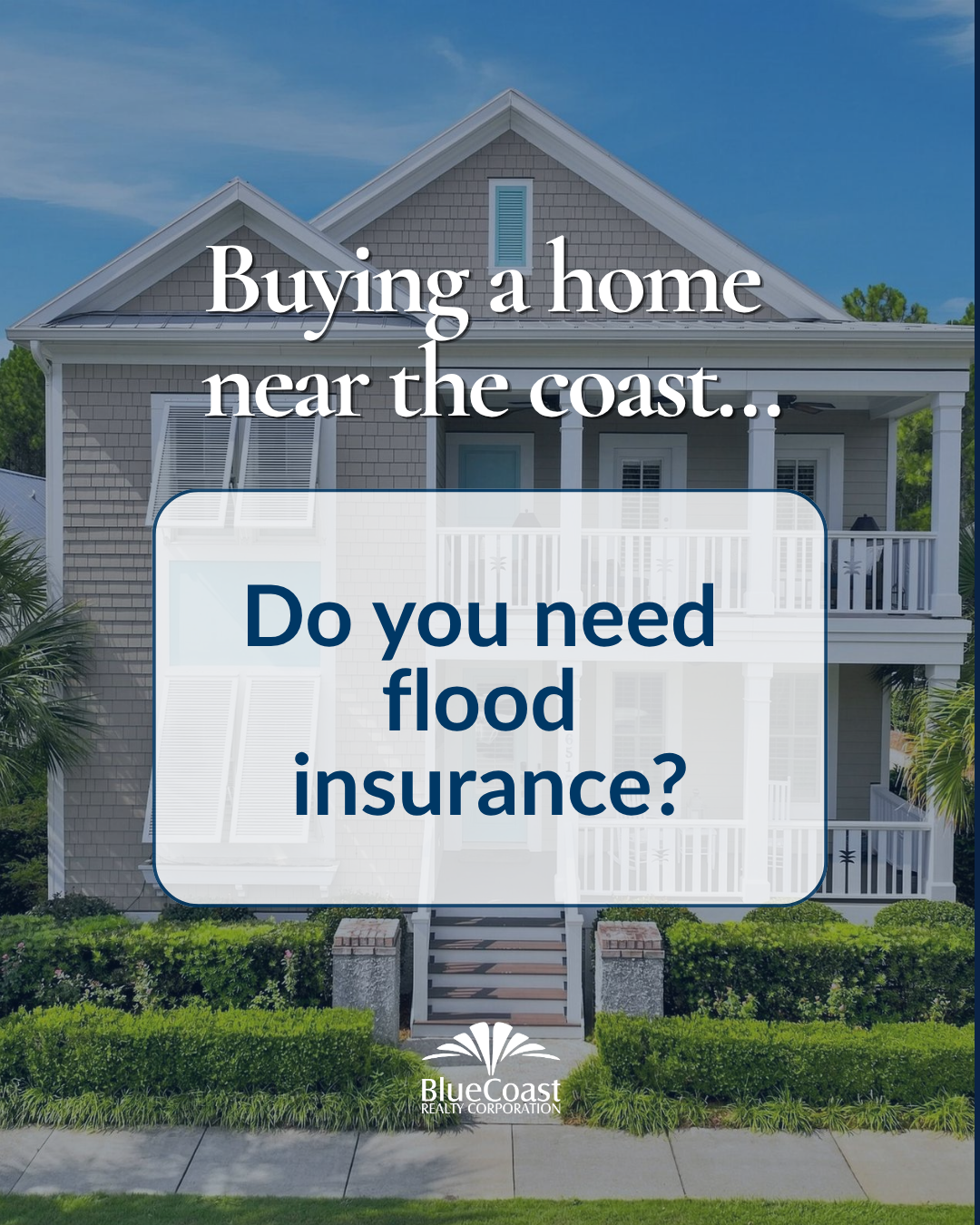
Why the flood zone isn't the whole story. A property outside a high-risk flood zone can still experience flooding.
Look at:
- Elevation
- Drainage
- Storm history
- Nearby waterways
- Prior claims
- Flood maps
- Finished-floor elevation
Wilmington vs. the beaches.
Flood exposure can vary significantly between Wilmington neighborhoods and beach communities. A buyer in inland Wilmington may face a very different insurance profile from a property in Carolina Beach, Kure Beach or Wrightsville Beach. In fact, since 2019, there have been more flood insurance claim in the inland part of North Carolina than for coastal properties.
Frequently asked questions
Does homeowners insurance cover flooding?
Generally, standard homeowners insurance does not cover flood damage.
Does being in Zone X mean I can't flood?
No.
Can flood insurance be expensive?
Yes, depending on the property and coverage. The best option is to shop costs with your insurance agent.
BlueCoast local perspective
Never let “flood insurance isn't required” become shorthand for “flooding isn't a concern.” Before you buy near the water, we'll help you identify the flood and insurance questions that deserve answers.