What Recent North Carolina Housing Laws Mean for Wilmington Homeowners, Buyers & Sellers
From housing affordability to infrastructure and development, several recent local, state, and federal policy changes could shape the future of real estate across Wilmington, New Hanover County, Brunswick County, and Pender County. Here's what you should know—and why it matters.
When people think about the real estate market, they usually focus on mortgage rates, home prices, or inventory. But many of the biggest influences on housing happen long before a home hits the market.
Local governments decide where growth can occur. State lawmakers influence development costs and property rights. Federal legislation can impact housing inventory, affordability, and even who is buying homes.
At BlueCoast Realty, we believe informed clients make better decisions. Here's a breakdown of some recent government actions and what they could mean for our local housing market.
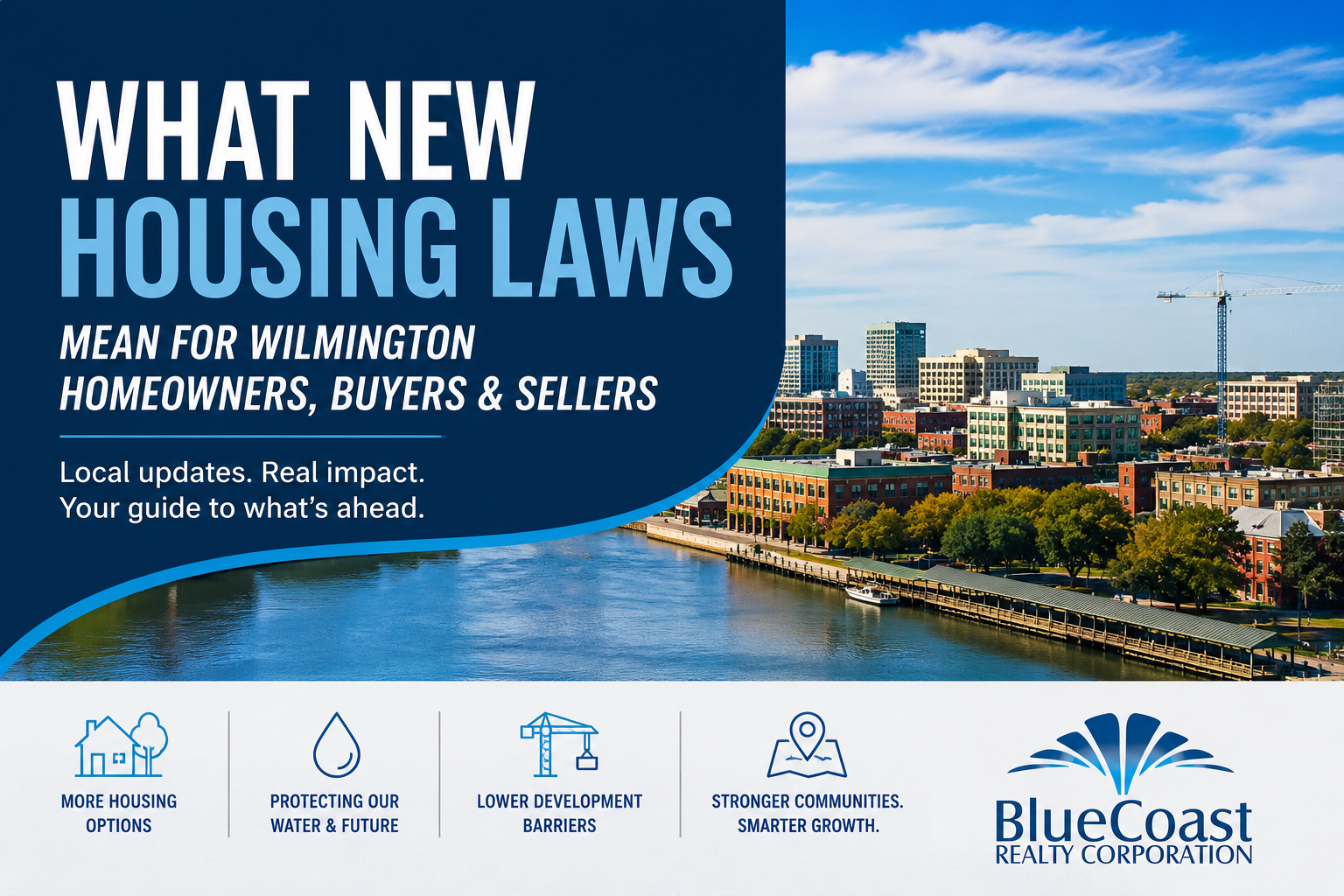
New Hanover County Launches a Workforce Housing Investment Fund
One of the biggest local announcements this month came from the New Hanover County Board of Commissioners, which unanimously approved a new $4 million Workforce Housing Investment Fund.
Unlike traditional housing subsidy programs, this fund operates as a revolving loan program. Developers can borrow money at below-market interest rates in exchange for reserving a portion of their communities for workforce housing.
The first project receiving funding is Proximity Blue Clay, a planned 236-townhome community in Castle Hayne.
Why This Matters
Housing affordability continues to be one of the biggest challenges facing southeastern North Carolina.
Teachers, healthcare workers, first responders, hospitality employees, and many other essential workers increasingly struggle to find housing close to where they work.
Programs like this don't solve the housing shortage overnight, but they may encourage additional housing construction while allowing private developers—not local government—to build and manage these communities.
For buyers and homeowners, increasing housing supply over time can help stabilize prices while supporting continued economic growth throughout the Wilmington region.
Protecting the Cape Fear Region's Water Supply
The recently adopted North Carolina budget includes legislation limiting future inter-basin water transfers out of the Cape Fear River Basin.
While this may sound like a technical policy issue, water availability is one of the most important factors determining where future growth can occur.
Why This Matters
Communities can't continue growing without reliable access to drinking water.
Protecting long-term water resources helps support sustainable residential and commercial development throughout New Hanover, Brunswick, and Pender Counties.
For homeowners, infrastructure planning like this often has a much greater long-term impact on property values than short-term market fluctuations.
Federal Housing Reform Could Increase Housing Inventory
Congress recently approved the 21st Century ROAD to Housing Act, one of the most significant federal housing packages in decades.
Among its provisions, the legislation:
-
Reduces barriers to new residential construction.
-
Expands opportunities for manufactured housing.
-
Streamlines certain federal housing programs.
-
Places new restrictions on some large institutional investors purchasing additional single-family homes.
Why This Matters
Across North Carolina—and especially in coastal communities like Wilmington—the biggest challenge remains housing inventory.
While no single law can solve the shortage, reducing construction barriers and encouraging additional housing options may gradually improve affordability over the coming years.
More available housing generally creates healthier market conditions for both buyers and sellers. Learn about buying homes in our coastal area here!
New Development Laws Aim to Lower Construction Costs
Several new North Carolina laws are designed to reduce the cost and complexity of residential development.
Changes include:
-
Streamlining redevelopment requirements.
-
Creating new financing tools for infrastructure improvements.
-
Updating septic and private well permitting.
-
Modernizing regulations affecting home-based businesses.
Why This Matters
Every added cost during development eventually affects home prices.
When permitting becomes more predictable and infrastructure costs become easier to finance, builders have greater opportunities to develop housing that otherwise may not have been financially feasible.
While many of these changes won't be immediately visible to consumers, they could influence future housing inventory and development across the state.
Rural Property Owners Should Pay Attention
Several new laws specifically affect properties outside municipal utility service areas.
Updates to septic permitting, private wells, and conservation incentives could influence how quickly land can be developed and how certain rural properties are used in the future.
Why This Matters
If you're buying vacant land, building a custom home, or purchasing property in rural New Hanover, Brunswick, Pender, Columbus, or surrounding counties, understanding these regulations can help avoid delays during due diligence.
These issues also play an important role in determining whether a parcel is buildable—and ultimately, its value.
What This Means for the Wilmington Real Estate Market
None of these legislative changes will immediately change home prices or inventory.
However, together they point toward several long-term trends:
-
Continued efforts to increase housing supply.
-
Greater investment in infrastructure that supports future growth.
-
Reduced development barriers.
-
Increased focus on housing affordability.
-
More attention on balancing growth with conservation.
For homeowners, buyers, sellers, and investors, understanding these trends provides valuable context beyond monthly market statistics.
Real estate is local—but it's also influenced by decisions made at every level of government.
BlueCoast's Take
The headlines can make legislation seem overwhelming, but most policy changes simply become another piece of the market puzzle.
Our role isn't to tell clients what to think about public policy. It's to understand how these decisions may influence home values, neighborhood growth, housing supply, and future opportunities throughout coastal North Carolina.
Whether you're considering buying your first home, selling your current property, investing in rental property, or simply wondering how our region is changing, staying informed helps you make confident real estate decisions.
If you'd like to discuss how these changes could affect your property or your real estate goals, the BlueCoast Realty team is always happy to help.
Thinking about buying or selling in Wilmington or the surrounding coastal communities? Contact BlueCoast Realty today for local expertise backed by market knowledge—not just headlines.